
To the Mentally Ill: Your Brains Are Fine
There is no evidence you have a chemical imbalance.
Your problems are not stemming from defective genes.
Unless you were actually hit in the head, deficient in vitamin B12 for a period of time, or have some other medical problem, your brain is perfectly fine.
Why am I asserting this so confidently?
Despite over a hundred years of research, psychiatrists and psychologists still have not found a physical cause of this thing called mental illness. No diagnoses from the Diagnostic and Statistical Manual of Mental disorders (DSM) that mental health professionals use are confirmed with medical tests, i.e. blood tests, brain scans, biopsies, etc. Below, you can see mental heath workers admit this.
A compilation of quotes from mostly psychiatrists and psychologists discussing the lack of biological basis for mental health disorders as delineated in the DSM.
Jeffrey Schaler, Psychologist
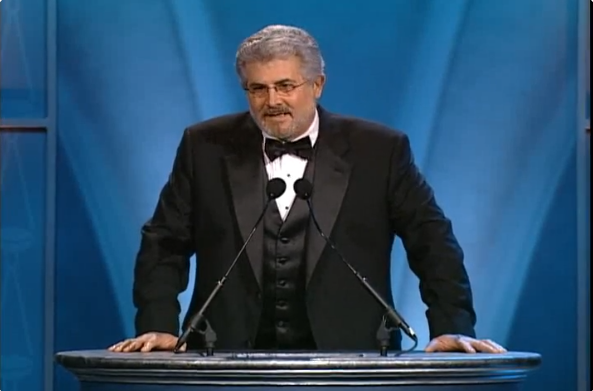
What do we know that is true that the cult of psychiatry keeps telling us is false? First, the idea that there is a known brain lesion causing mental illness. The truth is, we cannot tell who is mentally ill and who is not by looking at pictures of their brains or analyzing their blood. Psychiatrists had to invent their own book of diseases because pathologists would have nothing to do with them. It’s called the Diagnostic and Statistical Manual for Mental Disorders, the DSM, a great work of fiction. What’s the difference between the DSM and a scientific book of disease? Every disorder in the DSM is invented. Every disease listed in a pathology textbook is discovered. Real disease is found in a cadaver at autopsy. Mental illness is not. Mental illness refers to something that a person does. Real disease refers to something that a person has.
–CCHRInt. (2008, Feb. 8). Jeffrey A. Schaler, Ph.D., Professor of Psychology [Video]. Youtube.
Allen Frances, Psychologist
DSM mental disorders are constructs, not diseases. Descriptive, not explanatory. Helpful in communication/treatment planning. But no claims re causality/homogeneity/clear boundaries. Clinically useful when used skeptically. We wrote all this in DSM-IV Intro- but no one read it.
– Frances, A. (Sep 27, 2022). Tweet posted on Twitter.
The incredible recent advances in neuroscience, molecular biology, and brain imaging that have taught us so much about normal brain functioning are still not relevant to the clinical practicalities of everyday psychiatric diagnosis. The clearest evidence supporting this disappointing fact is that not even 1 biological test is ready for inclusion in the criteria sets for DSM-V. Fortunately, the NIMH is now embarked on a fascinating effort to effect the real paradigm shift of basing diagnosis on biological findings. Unfortunately, this is years (if not decades) from fruition.
– Frances, A. (2009, June 27). “A Warning Sign on the Road to DSM-V: Beware of Its Unintended Consequences.” Psychiatric Times, Vol. 26, Issue 8.
Chris Palmer, Psychiatrist
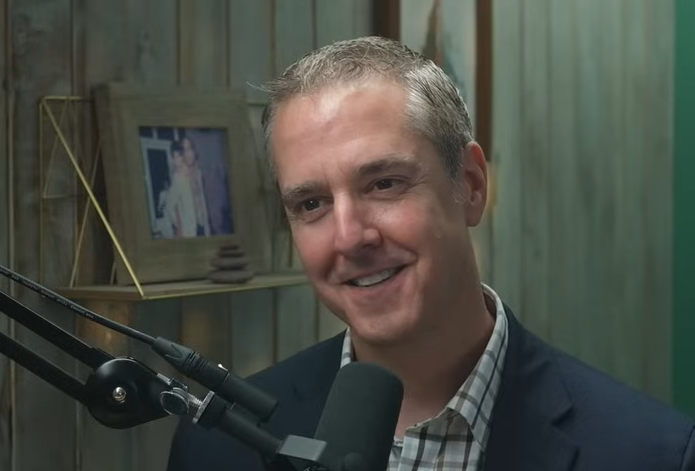
So, I think many of the mental health professionals, in their minds they think they are after the root cause. Um, it’s a chemical imbalance, and we just need to figure out which chemicals in which patients, and if we can just rebalance our chemicals appropriately, and that means finding the right medication or combination of medications, at the right doses, in the right timing, maybe sometimes at night, maybe sometimes in the morning, maybe three times a day. If we can just find that perfect combination, we can balance their chemicals appropriately, and they will be in remission and they will live happily ever after. And the reality is, that’s all hogwash. None of that’s true.
– Dr Rangan Chatterjee (2023, Oct. 25). “Mental Health Experts Were Wrong!” Scary Link Between Lifestyle & Mental Illness Chris Palmer. [Video]. Youtube.
Ron Leifer, Psychiatrist

As a psychiatrist in private practice I get many calls from people who say they want treatment for their “biochemical imbalance.” I ask them if they have had a chemical test that demonstrated the imbalance. The answer is always no because there is no test. I ask them whether they know which chemical is imbalanced. They typically have no idea. I ask them how they know they have a chemical imbalance. They tell me either their primary physician told them, or that their aunt was told she has it, or they saw it on television. So called “biochemical imbalances” are the only illnesses I know of which are spread by word of mouth. The claim that depression is a disease is propaganda promoted by psychiatry and the state and marketed by drug companies: the State-Science Alliance.
— Leifer, R. (2000, Dec. 27). “A Critique of Psychiatry and an Invitation to Dialogue.” Ethical Human Science and Services
Darrel Regier, Psychiatrist
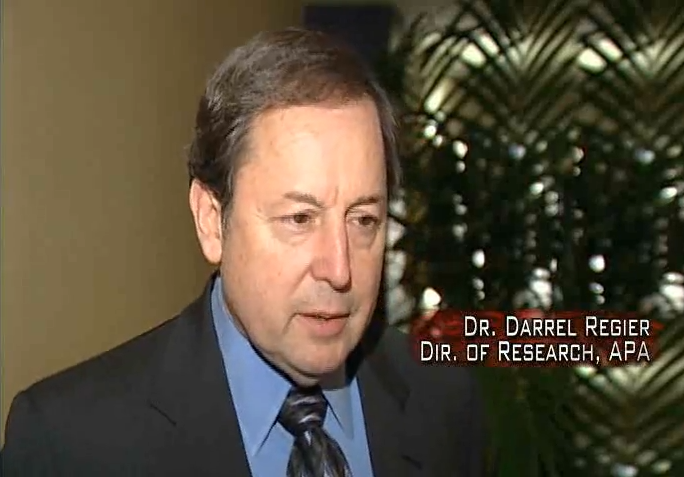
I’m the director of research at the American Psychiatric Association. We don’t know the etiology of really any of the mental disorders at the present time.
– CCHRInt (2008, Feb. 27). The Diagnostic and Statistical Manual of Mental Disorders (DSM). [Video]. Youtube.
Toby Watson, Psychologist
Psychiatry has not only misled the general public but psychiatry in general and the pharmaceutical industry has misled the media, the politicians, legislation. When you have billions of dollars at your disposal, it grants you access to all of them to give false and misleading information. The problem is these people are not trained or equipped to ask the tough questions of asking for proof, of evidence about their false and misleading claims that mental suffering is somehow a biological disease. In psychiatry and psychology, there are no medical tests, no scans, no blood work that can diagnose anybody with a mental disorder. When they come up with a diagnosis, they literally do it by a show of hands, based on a vote. That is totally unlike any true medical illness where people have true physiological tissue damage or there’s an actual test to verify whether somebody has a medical condition or that they don’t.
– CCHRInt (2017, Mar. 20). Psychologist Toby Watson – Psychiatry is Misleading the Public About Mental Disorders [Video]. Youtube.
Dr. David Kaiser, Psychiatrist
Patients these days are not suffering from “biologic illnesses.” What I generally see is patients suffering from current or past violence, traumatic loss, loss of power or control over their lives and the effects of cultural fragmentation, isolation and impoverishment that are specific to this culture at this time.– Kaiser, D. (1996). “Against Biologic Psychiatry.” Psychiatric Times, Vol. XIII, Issue 12.
I am constantly amazed by how many patients who come to see me believe or want to believe that their difficulties are biologic and can be relieved by a pill. This is despite the fact that modern psychiatry has yet to convincingly prove the genetic/biologic cause of any single mental illness. However, this does not stop psychiatry from making essentially unproven claims that depression, bipolar illness, anxiety disorders, alcoholism and a host of other disorders are in fact primarily biologic and probably genetic in origin, and that it is only a matter of time until all this is proven. This kind of faith in science and progress is staggering, not to mention naive and perhaps delusional.
– Kaiser, D. (1996). “Against Biologic Psychiatry.” Psychiatric Times, Vol. XIII, Issue 12.
Unfortunately what I also see these days are the casualties of this new biologic psychiatry, as patients often come to me with many years of past treatment. Patients having been diagnosed with “chemical imbalances” despite the fact that no test exists to support such a claim, and that there is no real conception of what a correct chemical balance would look like. Patients with years of medication trials which have done nothing except reify in them an identity as a chronic patient with a bad brain. This identification as a biologically-impaired patient is one of the most destructive effects of biologic psychiatry. Modern psychiatrists seem unaware of what psychoanalysts know well, namely how powerful are the words that a patient hears from an authority figure like a psychiatrist. The opportunity here for suggestion, coercion and manipulation are quite real.
– Kaiser, D. (1996). “Against Biologic Psychiatry.” Psychiatric Times, Vol. XIII, Issue 12.
Herb Kutchins, Sociologist
The fact that it [psychiatric diagnosis] is couched in the language of science without, again, without necessarily having any of the scientific data or-or underpinnings to justify it is as threatening as anything we’ve seen today.
– CCHRInt. (2008, Feb. 27). The Diagnostic and Statistical Manual of Mental Disorders (DSM). [Video]. Youtube.
Edwin Fuller Torrey, Research Psychiatrist
The mind cannot really become diseased any more than the intellect can become abscessed. Furthermore, the idea that mental “diseases” are actually brain diseases creates a strange category of “diseases” which are, by definition, without known cause. Body and behavior become intertwined in this confusion until they are no longer distinguishable. It is necessary to return to first principles: a disease is something you have, behavior is something you do.
— Torrey, E.F. (1974). The Death of Psychiatry, p. 40.
Robert E. Hales, MD, & Stuart C. Yudofsky, Psychiatrist
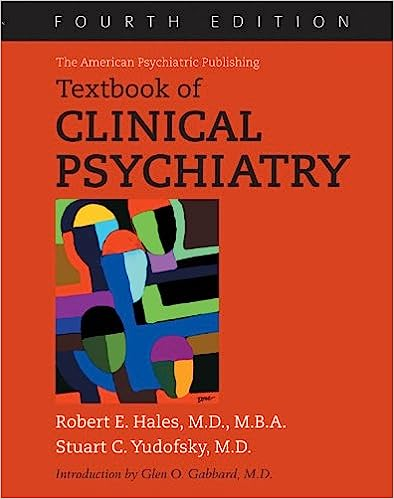
“No biological markers for any classic psychiatric disorders (such as major depression, schizophrenia, or bipolar disorder) have yet been confirmed as having a clearly defined utility in routine clinical practice. Nevertheless, psychiatrists and clinical neuroscientists continue their search for biological markers that will be useful to clinicians in making diagnostic, treatment, and prognostic determinations for psychiatric patients.”
– Hales, R.E. & Yudofsky, S.C. (2002). Textbook of Clinical Psychiatry, p. 250.
Colin A. Ross, Psychiatrist, & Alvin Pam, Psychologist
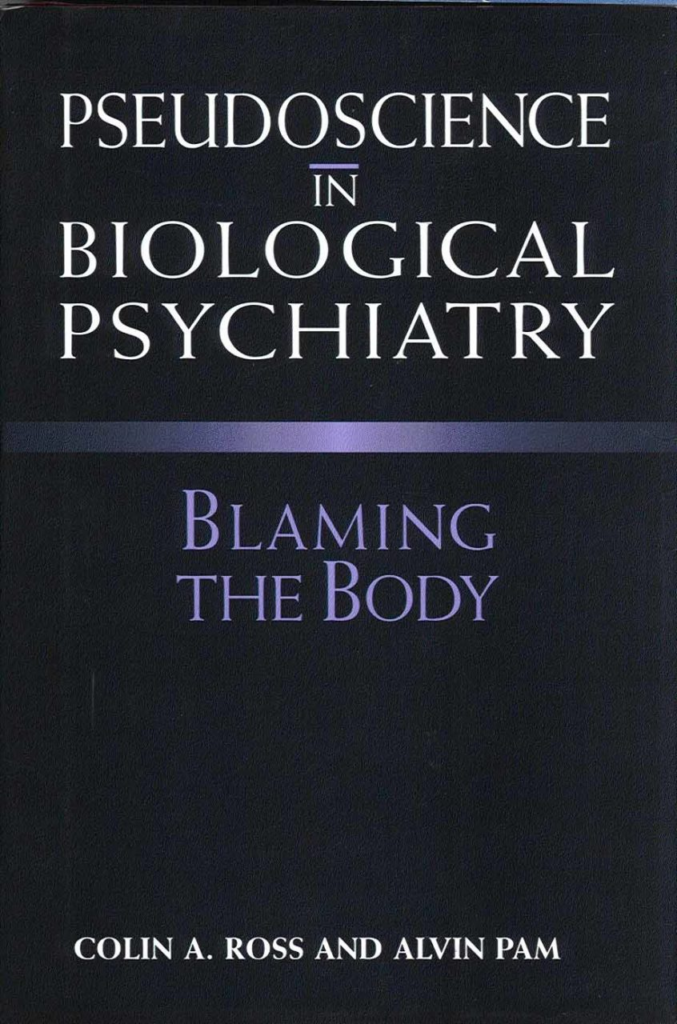
The belief that schizophrenia is a specific organic disease or a group of organic brain diseases has never been confirmed. We have been on the verge of confirming it since the dawn of modern psychiatry, and we are still on the verge.
– Ross, C.A. & Pam, A. (1995). Pseudoscience in Biological Psychiatry, pp. 193-194.
Biological psychiatry has not made a single discovery of clinical relevance in the past 10 years, despite hundreds of millions of dollars of research funding.
– Ross, C.A. & Pam, A. (1995). Pseudoscience in Biological Psychiatry, pp. 193-194.
“The history of biological psychiatry can be depicted as a tale of ‘promising’ leads, closure on slender evidence, hyperbole as initial reception to new work, and ultimately unproductive results. … following about a century of effort, a harsh assessment would be that no substantive results have been tendered for the pathogenesis of any major psychiatric disorder”
– Ross, C.A. & Pam, A. (1995). Pseudoscience in Biological Psychiatry, pp. 193-194.
Loren R. Mosher, Psychiatrist
Diagnostic reliability is easy to attain for research projects. The issue is what do the categories tell us? Do they in fact accurately represent the person with a problem? They don’t, and can’t, because there are no external validating criteria for psychiatric diagnoses. There is neither a blood test nor specific anatomic lesions for any major psychiatric disorder. So, where are we? APA as an organization has implicitly (sometimes explicitly as well) bought into a theoretical hoax. Is psychiatry a hoax, as practiced today?
– Mosher, L.R. (1998, Dec. 4). Letter of resignation from the American Psychiatric Association.
Peter Breggin, Psychiatrist, & David Cohen, PhD
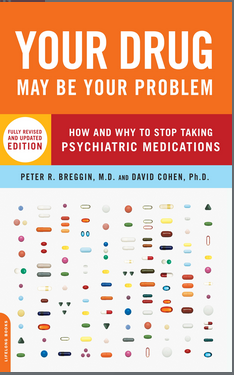
As noted, the decision to take or to stop taking psychiatric drugs should be a personal one. It should not be trivialized by glib acceptance of pseudo-medical arguments from your doctor or others such as “This drug is the most effective treatment for your serious illness” or “This drug corrects biochemical imbalances in your brain” or “Never fail to take this medication; it’s just like insulin for diabetes.” In the field of mental health, not a single physical explanation has been confirmed for any of the hundreds of psychiatric “disorders” listed in the DSM-IV. A recent editorial in the American Journal of Psychiatry states the case plainly: “[A]s yet, we have no identified etiological agents for psychiatric disorders.”‘ Even in this age of biological quick fixes, an increasing number of researchers are documenting the observation that nondrug approaches produce equivalent or better results than drugs. This is true even for problems considered extremely serious, such as “schizophrenia.” Your doctor’s claims to the contrary have little or no scientific basis.
– Breggin, P. & Cohen, D. (2007). Your Drug May Be Your Problem, p. 138.
Ty C. Colbert, Psychologist
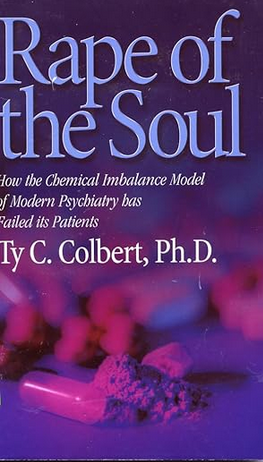
The only evidence that makes mental illness a disease “are the symptoms used by professionals to label someone mentally ill. But the symptoms used to diagnose someone as mentally ill (despair, hopelessness, sadness, anger, shame, guilt …) are not biological markers. There is no evidence that these expressions are physical in nature. They all point to a hurting soul.”
– Colbert, T.C. (2001). Rape of the Soul: How the Chemical Imbalance Model of Modern Psychiatry has Failed Its Patients, p. 237-238.
In order for individuals to fully affirm a non-biological model of mental illness, it will be necessary to have a solid understanding of the main fallacies behind the biological model. Even though biopsychiatric researchers are willing to admit that, to this date, no pathophysiological or cause-and-effect evidence exists, they still consistently claim that they are getting closer and that they are making great strides with the new technology now available to them.
– Colbert, T.C. (2017). The Four False Pillars of Biopsychiatry.
As a final note, Loren Mosher, who oversaw much of the earlier research on schizophrenia at the NIMH when some of the major inheritance studies were funded, stated that Nazi Germany developed the best genetic research project possible. They either killed or sterilized a whole population of individuals diagnosed with schizophrenia. Yet within one generation, the same incidence of those diagnosed with schizophrenia returned. If the disorder had been truly genetic, such a quick return would not have been possible.
– Colbert, T.C. (2017). The Four False Pillars of Biopsychiatry.
Today, science has the necessary technology to determine whether or not chemical imbalances exist, but none have been found. It is this fact that has prompted the present (2014) director of the NIMH, Thomas Insel, to state that “earlier notions of mental disorders as chemical imbalances or social constructs are beginning to look antiquated.” Also, William Whirsing, M.D., professor of psychiatry at UCLA, stated to a room full of psychiatrists that “We have been misleading the public about the chemical imbalance model for 40 years.” Finally, ex-director of the NIMH, Steve Hyman, upon summarizing over 40 years of research pertaining to the effects of antipsychotic drugs, reported that the use of the drugs actually creates, rather than corrects, a biochemical imbalance within the brain and in fact works similar to drugs of choice or street drugs.
– Colbert, T.C. (2017). The Four False Pillars of Biopsychiatry.
Simply put, researchers have searched the entire human genome, as well as combed the entire world looking for appropriate multiplegenerational families to study. To date, not one single gene for any so- Four False Pillars called mental illness has been identified. They find markers or “possibilities,” but when other researchers attempt to duplicate the results, they cannot, and the original claims have had to be retracted.
– Colbert, T.C. (2017). The Four False Pillars of Biopsychiatry.
Richard E Vatz, Lee S. Weinber, & Thomas Szasz, Psychiatrist
Watching these [TV] shows, no one would ever know that in the professional journals of mental-health workers, civil libertarians, lawyers and even psychiatry itself there is increasing controversy whether, in either scientific or legal terms, “mental illness” can be meaningfully said to exist. This view holds that for an “illness” to be scientifically meaningful, it must somehow be capable of being approached, measured or tested in a scientific fashion, as through a blood test or an electroencephalograph. If it cannot be so measured — as is the case of most of what is termed “mental illness” — then the phrase “illness” is at best a metaphor and at worst a myth, and that therefore “treating” these “illnesses” is an equally amorphous and unscientific enterprise.
– Vatz, R.E., Weinber, L.S. & Szasz, T.S. (1985, Sep. 15). “Why Does Television Grovel at the Altar of Psychiatry?” The Washington Post.
Marcos Ramos, Psychiatry Resident
In 1990 President George Bush announced that “a new era of discovery” was “dawning in brain research.” Over the next several decades the U.S. government poured billions of dollars into science that promised to revolutionize our understanding of psychiatric disorders, from depression and bipolar disorder to schizophrenia. Scientists imagined that mental illnesses in the future might be diagnosed with genetic tests, a simple blood draw, or perhaps a scan of your brain. New pharmaceuticals would target specific neurochemical imbalances, resulting in more effective treatments. … The reality of psychiatric practice is far less glamorous than the visions of its future that I grew up with. Thirty years later we still have no biological tests for psychiatric disorders, and none is in the pipeline.
– Ramos, M. (2022, May 17). Mental Illness Is Not in Your Head. The Boston Review
When a patient asks me how an antidepressant works, I have to shrug my shoulders. “We just don’t know, but we do have evidence that there’s about a 30 percent chance that it will help your mood.” Perplexed, one patient responded, “Doesn’t it have to do with neurotransmitters or something?” I sighed, “Yes, that was the theory for a while, but it didn’t pan out.”
– Ramos, M. (2022, May 17). Mental Illness Is Not in Your Head. The Boston Review.
In Mind Fixers: Psychiatry’s Troubled Search for the Biology of Mental Illness, Anne Harrington argues that the current crisis is just the latest in a long line of failures to discover the biology of mental illness over the last two centuries. In this sweeping study, the history of psychiatry undulates like the boom and bust of a speculative market. First a wave builds with enthusiastic promises of revolutionary breakthroughs that will change psychiatry as we know it. Then the wave collapses, as psychiatrists fail to deliver on those bold promises. Crisis ensues, and after the requisite finger-pointing, the next wave of psychiatric revolution begins to build. Rinse and repeat.
– Ramos, M. (2022, May 17). Mental Illness Is Not in Your Head. The Boston Review.
Gregg Henriques, Psychologist
First, medicine is a real science that deals with biological phenomena, especially cellular pathology. At its core, the role of medicine is the treatment of cellular/physiological pathology that leads to harm. …Now take a look at the DSM and one will immediately note that the DSM is not based at all on cellular pathology. Diagnostic categories are instead based on overt behaviors, reports of internal experiences, and cognitive deficiencies. For many of the conditions, organic explanations are to be RULED OUT in order for a DSM diagnosis to be given. If it is not about cellular pathology, what, then, is the field of “mental health and disease” really about?
– Henriques, G. (2012, Dec. 20). “Is Psychiatry the Science of Lies?” Psychology Today.
Anne Harrington, Historian
For make no mistake: today one is hard-pressed to find anyone knowledgeable who believes that the socalled [sic] biological revolution of the 1980s made good on most or even any of its therapeutic and scientific promises. Criticism of the enterprise has escalated sharply in recent decades. It is now increasingly clear to the general public that it overreached, overpromised, overdiagnosed, overmedicated, and compromised its principles.
– Harrington, A. (2019). Mind fixers: Psychiatry’s troubled search for the biology of mental illness.
Lisa Cosgrove, Psychologist
Now, I had mentioned before that I think psychiatry could be the poster child, and one of the reasons that I think psychiatry is particularly vulnerable to playing handmade into industry is because there are no biological markers for any of the DSM disorders. I think most people, if you know polled people, would be shocked to find out that you give a diagnosis of schizophrenia, there’s no scanning technique, there’s no blood test; you give a diagnosis of bipolar disorder, there’s no scanning technique, no blood test, nothing. No, it relies on a person’s subjective judgment. And well, certainly other biomarkers can be fungible in other areas of medicine. The fact there are none and it relies on a person’s in– totally on a person’s interpretation of behaviors qua symptoms, makes it, I think, very vulnerable to industry influence.
– PharmedOut. (2016, June 3). Psychiatry Under the Influence | Lisa Cosgrove at PharmedOut. [Video]. Youtube.
Thomas Insel, Psychiatrist & Neuroscientist
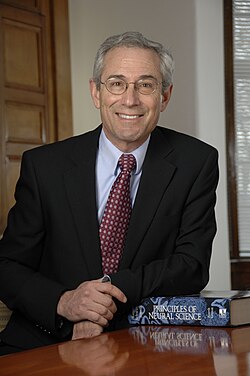
In a few weeks, the American Psychiatric Association will release its new edition of the Diagnostic and Statistical Manual of Mental Disorders (DSM-5).… The goal of this new manual, as with all previous editions, is to provide a common language for describing psychopathology. While DSM has been described as a “Bible” for the field, it is, at best, a dictionary, creating a set of labels and defining each. The strength of each of the editions of DSM has been “reliability” – each edition has ensured that clinicians use the same terms in the same ways. The weakness is its lack of validity. Unlike our definitions of ischemic heart disease, lymphoma, or AIDS, the DSM diagnoses are based on a consensus about clusters of clinical symptoms, not any objective laboratory measure…. It became immediately clear that we cannot design a system based on biomarkers or cognitive performance because we lack the data.
– Insel, T. (2013, Apr. 29). Transforming Diagnosis. Psych Rights.
Niall McLaren, Psychiatrist
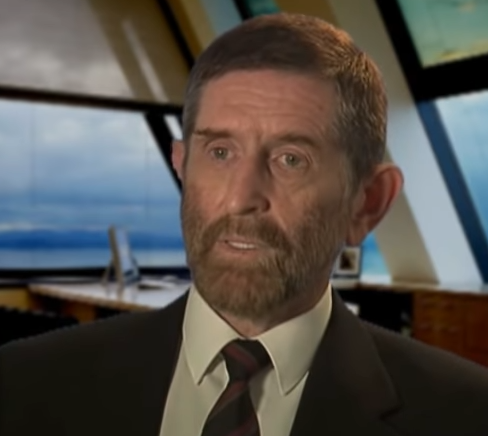
Within a few months of starting psychiatry, I was realizing there was something seriously wrong with it. It was immediately obvious to me that psychiatrists were making claims that they couldn’t have made, that they were making claims which simply were not justified in biology. But if you stand up and say that what you’re doing, gentle – ladies and gentlemen, is not science, it’s pseudoscience, then you are challenging what’s holding the whole profession together.
– CCHRInt. (2009 Oct. 23). CCHR: What’s Wrong with Psychiatry? A Psychiatrist Explains… [Video]. Youtube.
Steven C. Hayes, Psychologist
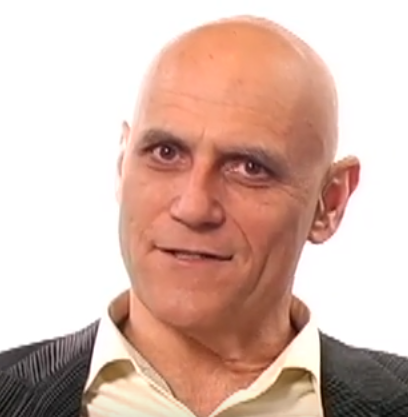
We currently practice mental health care inside one of two classification systems: The Diagnostic Statistical Manual (DSM) or the International Classification of Diseases (ICD)… After half a century of trying, and many billions spent, such classification schemes have not led to functional groupings of etiology, course, and response to treatment. Not even one.
– Hayes, S.C. (2020, June 2). Why the Mental Health System Is Failing Us. Psychology Today.
You can, of course, also find valid criticism of the biochemical/neurological claim of mental illness outside of this field.
These people don’t know what causes mental illness, and they often don’t even know what they’re talking about. Personally, I chose to turn to God rather than these people — and it has been paying off beautifully.
Relevant articles: