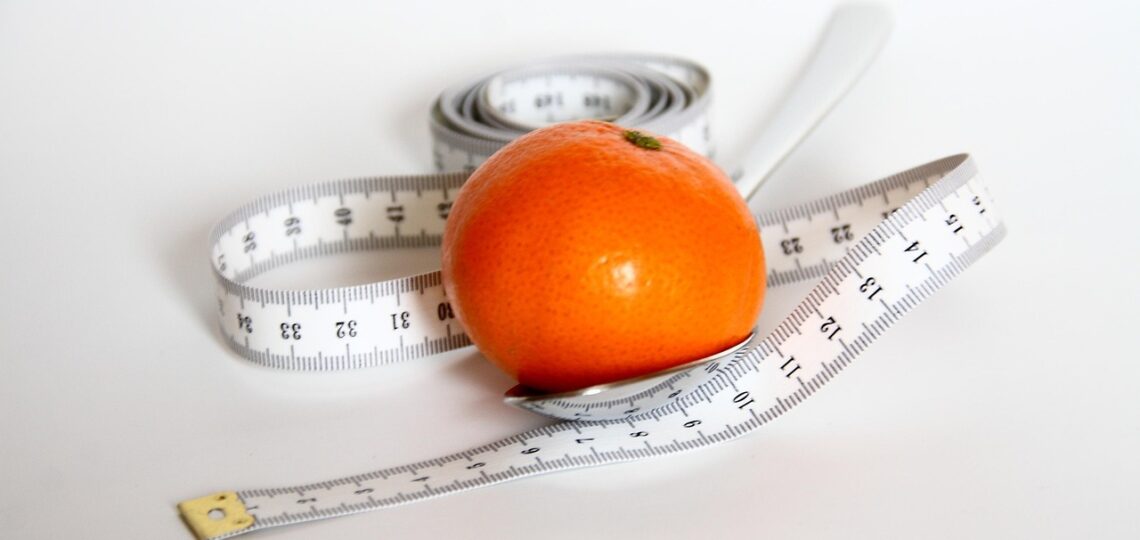
Weight Loss as Self-Care
For those that are overweight, achieving weight loss is an excellent form of self-care. So many health benefits come with losing weight. These have been repeated in many places, and you likely are already aware of at least some, such as better cardiovascular health, improved cholesterol, decreased risk of type 2 diabetes, and reversal of sleep apnea. However, as this website is geared toward mental health, I’ll be focusing on the psychological benefits of weight loss.
Obesity and poor mental health tend to go hand in hand. This relationship has been confirmed by a number of studies, such as this one and this one. If everyone with a weight loss goal somehow succeeded, it would be curious to know how big of a dent this would create in national anxiety and depression rates! The relationship between obesity and poor mental health appears to be circular. For example, some people can become obese due to comfort eating from existing depression, and others can become depressed because they are obese. Some researchers found that the adverse psychological effects of excess weight are greater for women, while others found that both sexes are equally affected. It turns out that undergoing a weight loss intervention boosts mental health in multiple areas, such as raising confidence in undertaking goals, improving depression, and helping body image.
Being slim comes with benefits beyond enjoying what you see in the mirror or feeling more confident. Some of these may surprise you.
One such benefit is getting better treatment from other people. Does this sound unfair? Like it or lump it, it’s true. There are so many accounts on the internet of people losing weight and then being unpleasantly surprised at how much better others treated them. Even a famous celebrity who fairly recently lost weight noted that people started offering to carry her groceries for her, which did not happen before the weight loss. The better treatment seems to come especially (though not exclusively) from the opposite sex. Which brings me to my next point –
Being slim provides an advantage in the dating market. I won’t go into detail, because this should be pretty intuitive. And yes, the advantage of being slim applies for both men and women.
More shockingly, whether or not one has a healthy weight even affects the ease of getting a job and the chances of getting a promotion! As unfortunate as it sounds, many employers overlook heavier candidates for a variety of reasons. These include perceptions of overweight people as possessing less competence, conscientiousness, motivation, and self-control. Some hiring managers hesitate due to concerns about increased absences and decreased productivity due to health-related issues, which (truth be told) is not unfounded. Superficiality can also be a major reason why heavier people can be passed over for a promotion. That is to say, a company may want someone that “looks the part” to represent them.
The question is, at this point, what to do with this information? Embark on a seemingly quixotic mission to change ingrained human preferences, or lose weight to fit those preferences and thereby reap the benefits?
If you incline toward the second option, let us review some diets.
How Does One Lose Excess Fat?
There are so many ways to lose weight. For those who are leading sedentary lives, exercise can sometimes suffice to fix the problem. Others, if not most, may find an adjustment to their eating habits helpful. A combination of a healthy diet plus exercise is obviously the optimum option. Here is an overview of diets that is decent but not comprehensive.
Calorie Counting
I think of calorie counting as the gold standard of weight loss. If you have disciplinary issues (e.g. “I’ll have just one more”) and need a firm boundary as to how much food to consume, calorie counting is the way to go. Another benefit is that no foods are off limits, as long as you know the calorie content. You can find weight loss calculators online to help you determine the number of calories to aim for; these calculators will give an estimate of how long it will take you to lose weight based on the amount of calories you choose, your sex, age, and activity levels.
Portion Control
This is the “French secret” to staying thin. Like with calorie counting, you can eat whatever you want with portion control; you just have to be careful to take smaller-sized portions and to monitor your stomach for signs of fullness. Usually, this method involves eating slowly so that the stomach is given sufficient time to signal fullness. In this way, the eater avoids inadvertent over-stuffing that can stall weight loss. When you get the hang of it, portion control is perhaps the least involved method on this page. It can be as simple as having two slices of pizza for dinner instead of the usual four. Of course, the downside is needing a good measure of self-control around food, which may be an issue for those prone to binging.
Vegetarian Diet
The vegetarian diet is not necessarily a weight loss diet. Like any diet, it can be used for that purpose, though. Vegetarians exclude meat, except for pescatarians, who eat fish and seafood. Ovo-vegetarians exclude animal foods except for eggs, and lacto-vegetarians consume dairy but no other animal foods. Someone who wants to utilize a vegetarian diet for weight loss should focus on prioritizing unrefined foods for better nutrition and bulkier meals with less caloric density.
Vegan Diet
The vegan diet is a more extreme version of the vegetarian diet in that it excludes all animal foods. Like the vegetarian diet, it is not necessarily a weight loss diet. Variants of this diet that are promoted for weight loss usually focus on unrefined, high fiber foods like beans, whole grains, whole fruits, and fresh vegetables. The reason why it can work is because you fill up your stomach with bulky, fiber-rich foods that are not calorie-dense. It is also possible that nutrients, including calories, are less efficiently extracted from plant foods because of the fiber, thereby allowing (and perhaps even necessitating) increased intake of food. Downsides of this diet include needing to rely on supplements such as B12 and also possibly developing iron deficiency in the long term.
Raw Vegan Diet
This variant of the vegan diet excludes all cooked foods. Adherents often eat a lot of salads, fruits, and nuts. Preserving the enzyme content of foods for better digestion is a goal, and therefore they often dehydrate foods at low temperature to mimic the textures of cooked foods without the enzyme loss. Some also soak or sprout food staples that are edible raw, like peas or chickpeas – but never beans like kidney or black beans, which are toxic raw. A number of raw vegans are technically “cheagans,” meaning they incorporate a small amount of animal foods.
Fruitarian Diet
The fruitarian diet is another whole foods variant of the vegan diet that is comprised mostly (if not entirely) of fresh, frozen, and dried fruit. Oftentimes, proponents will also incorporate leafy greens. Due to its restrictive nature, the risk of malnutrition is a real concern. Excess sugar intake and lack of certain nutrients like vitamin K2 can also increase the risk of dental problems. Personally, this is a diet I would not pursue myself, as there are documented examples of followers experiencing malnutrition.
Paleolithic Diet
The Paleo diet is also known as the “caveman diet,” because the idea is to recreate the diet that ancient humans supposedly ate according to the religion of evolution. Followers of this diet can not have any grains, dairy, legumes, salt, sugar, or processed foods, instead relying on a variety of meats, seeds, nuts, eggs, fats such as coconut or olive oil, vegetables, and fruits.
Keto Diet
Keto is a high fat, low carbohydrate diet that was originally created as a treatment for children with epilepsy. The idea is to reach a state of ketosis, in which the body burns fat for fuel instead of glucose. Besides weight loss, a number of people have also experienced positive benefits for mental health issues while on the keto diet. Notably, some psychiatric medications (like Tegretol) are anti-epileptic drugs. It would be curious to know what the connection is between an anti-epileptic effect and relief from mental illness.
Carnivore Diet
On this diet, you can only eat meat (any kind, from beef to chicken to fish), eggs, seafood, and dairy products. Like keto, it is also a low-carb diet. Proponents tie the weight loss effect to reduced need for insulin compared to the standard diet. Personally, I believe that weight loss successes on this diet are more likely due to eating fewer calories overall, because how much meat can the average person eat without spices, sauces, a side of veggies, and bread or some other type of carbohydrate?
Volumetrics Diet
Two of the diets mentioned above (vegan and fruitarian) are essentially volumetrics diets. The idea is eating bulky, low calorie foods that fill up the stomach; you seek to induce the feeling of fullness that you would get eating normally, but without the high energy intake. A certain diet coach on the web advises eating raw fruits or vegetables before the main course to get the filling effect and then be able to have some preferred foods. I think that is a good idea.
Intermittent Fasting
Intermittent fasting incorporates periods of fasting and predetermined ranges of time to eat. For example, a follower of this diet may have an eating window from noon to 5pm and then fast from 5pm to noon the next day. No snacks allowed during the fasting window! A more extreme version is eating only one meal a day, known as “OMAD.” The purpose of these periods of fasting is to reduce insulin spikes triggered by eating in order to improve metabolic health and achieve weight loss. I wonder how much of the weight loss effect comes from the effect on insulin or merely is the result of eating less. After all, most people are probably not going to eat as much in, say, a single daily meal as they will across three regular meals. I estimated the caloric intake of a fairly famous Youtuber who achieved her weight loss through intermittent fasting, and it came to about 1500 calories (therefore, caloric restriction).
Mediterranean Diet
The Mediterranean diet is an eating plan based on the foods of the specified geographical area. It’s primarily promoted for its health benefits, and getting good nutrition should always be prioritized during weight loss. Foods incorporated include primarily whole vegetables, fruits, beans, grains, nuts, and seeds, with moderate amounts of dairy, olive oil for fat, and moderate amounts of meat and seafood.
Opinion
The problem is, there are so many diets, how does one figure which one to choose? My opinion on diets is… pretty much all of them can work, if done right. You can find testimonies of people achieving weight loss with any of the diets mentioned above. Whatever diet you are using, whether it is an established one or one you create for yourself, if you are succeeding in losing weight, then you are in a caloric deficit sufficient to get your system burning your fat reserves.
I know of a woman who was trying various diets with no success. She tried high-fat/low carb, vegan, raw vegan, vegetarian, the Paleo diet, intermittent fasting, low fat/high carb, and the Whole 30. Frustrated when her weight refused to budge, she eventually took advice she had been resisting, which was to count calories. Within a few months, she was able to reach her goal weight! I believe that without the restraints of calorie counting, she had been inadvertently overeating on all the other diets she had tried.
So yes, the old adage of “calories in, calories out” holds true. You really do need to consume fewer calories than you use to lose weight. Alternatively, you could achieve this deficit by simply upping your physical activity.
Was this helpful? Here are some other articles that may interest you: