On Personality tests in Psychology
For millennia, people have been fascinated with categorizing themselves into neat little boxes. Considering that people generally admire the multifaceted and the complex, the “jacks of all trades” like Leonardo da Vinci, Hedy Lamarr, Benjamin Franklin, and Howard Hughes, the thrill a number of us get with being given a limiting label, a type, seems contradictory and perhaps even self-deprecating. Yet, this inclination to pigeonhole oneself continues today with personality tests in psychology, particularly personality typing tests.
History is riddled with all sorts of attempts to assess the inner workings of humans and categorize them. If anything, the modern practice of actually asking people for their opinions is a step up from the often bizarre antics of the past!
2000 B.C. — Advent of Western Astrology
The long road to the modern personality test started with astrology. There are multiple systems of astrology, and the Western system started about 4000 years ago in Mesopotamia. According to astrology, our personalities (and destinies) are predetermined by the positions of celestial bodies in the sky at the time of birth.
The seeming predictive power of astrology has long been attributed to the Barnum effect; that is to say, astrology makes such generic statements that pretty much anyone reading them is able to relate to them. For example, you can find accounts of people being given the wrong Zodiac sign and identifying with it!
Unfortunately, astrology is experiencing a resurgence in interest despite scientific evidence to the contrary. Not long ago, I wrote an article discussing how multiple scientific studies have debunked the predictive claims of astrology.
~400 B.C. — The Four Temperaments
Greek physician Hippocrates theorized that different kinds of body fluids are responsible for our personalities and overall health. He proposed four basic personality types or “temperaments,” each of which caused by a predominance of one of four fluids – yellow bile, black bile, blood, and phlegm, which were referred to as “humours.” Needless to say, this early system of personality typing has long been discounted, though it is notable as an early forerunner of the personality tests used by psychology.
1796 — Phrenology
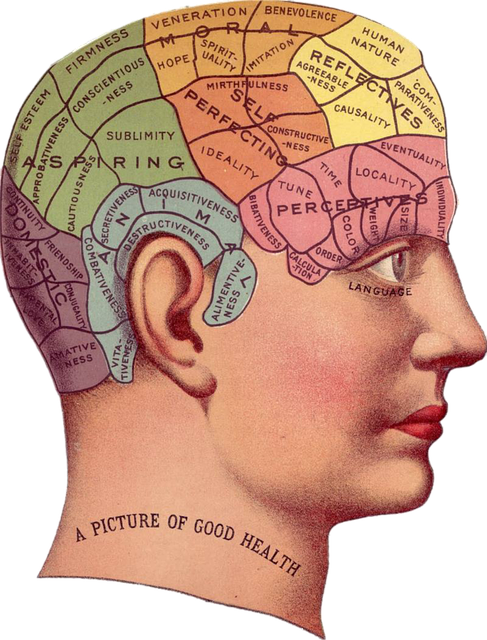
More than two thousand years later, phrenology sprang onto the scene. Initially known by other names, such as craniology, the idea was that the various qualities of the human mind, including personality, can be deduced from the shape of the skull. According to phrenologists, the brain was not a single organ but a cluster of multiple smaller organs, each of which governed a given characteristic. The greater or more developed a certain trait was, the larger its respective organ would grow, causing the skull to swell outwards over the organ. Therefore, a phrenologist purportedly could make a psychological assessment of a client by feeling the bumps on his or head – almost like Braille of the cranium!
Phrenology’s reign was short; its bad science eventually caught up with it, and the practice began to die out by the mid-1800s. A team of modern neuroscientists decided to test phrenology “in the spirit of scientific fun.” Perhaps unsurprisingly, “they were unable to find any correlation between the contours of the skull and the 23 personality traits, selected to mirror those championed by phrenology.”
1917 — The Advent of Personality Tests in Psychology
After thousands of years of goofy business such as consulting the stars, speculating about bodily fluids, and feeling bumps on people’s heads in order to determine personality, the experts finally decided it was time to ask the persons themselves. The Woodworth Personal Data Sheet, also known as the Woodworth Psychoneurotic Inventory, debuted during World War 1 as the first modern personality test, and it was meant to weed out prospective soldiers prone to PTSD (then known as shell shock).
Robert Sessions Woodworth, the psychologist who authored this test, developed it through rather decent empirical standards, testing trial questions on healthy college students, soldiers with PTSD, and recruits until he narrowed the questions down to a set that seemed to adequately eliminate the psychologically unfit. Though a time-efficient screening tool, it had the obvious weaknesses of relying on the self-awareness and honesty levels of the persons taking it. The Woodworth Personal Data Sheet was not finished in time to be employed in WWI, as originally intended, and it has since fallen out of use, replaced by other personality tests developed by psychology.
1943 — The MMPI Is Created
One world war later, psychologist and psychiatrist duo Starke Hathaway and Charnley McKinley teamed up to create the Minnesota Multiphasic Personality Inventory, or MMPI for short. Despite its name, the MMPI was not intended as a personality inventory so much as a full-spectrum pathology diagnosis tool for patients in the mental hospital where Hathaway worked. Like Woodworth, Hathaway and McKinley used good scientific methods to design their test, gathering data from multiple sources, particularly the mentally ill themselves and also a control group of normal people. Hathaway cleverly included questions designed to detect lying or carelessness in responding.
The end result contained over 500 questions and took up to an hour and a half to complete. Thanks to Hathaway’s students, who eagerly promoted the test, it became a big hit.
Though the MMPI reportedly performs well for the purpose intended of detecting psychological dysfunction, its use has spread to other areas for which it was not originally designed, such as the job market. While it can be justified for weeding out unstable applicants for high-risk jobs like police officers, the MMPI was not developed to determine good employee performance and has no business being used for that purpose – but it is. Many in the job market are pointlessly tormented and violated by this lengthy and intrusive test, and some have successfully countered with lawsuits.
1944-1962 — The MBTI Arrives on the Scene
Though notable in the history of personality test development, the Woodworth Psychoneurotic Inventory and MMPI are not personality typing tests, nor are they hits in pop culture. Enter the Meyers-Briggs Type Indicator (MBTI), which is both a typology test and a pop culture phenomenon.
It all started when Katharine Briggs created a personality test based off of Carl Jung’s writings on psychological types. Her daughter, Isabel Briggs Meyers, further developed and eventually published the test. The mother-daughter pair were both housewives and not formally educated in psychology or psychiatry.
The main issue, however, is Carl Jung himself. Some years ago, I came across the Youtube channel “INTJ,” run by former MBTI fan Ben. Ben had deleted all his typology videos after learning the disturbing practices of Carl Jung and instead dedicated his channel to exposing this test. Ben reveals that Carl Jung’s theories on psychological types did not come from careful empirical research on population samples; instead, they came from talking to spirits, particularly a spirit guide named Philemon! Despite his background in psychiatry and psychotherapy, it appears that Carl Jung was about as much a scientist as Harry Potter! You can check out Ben’s damning expose here. Perhaps not surprisingly, MBTI is known to have poor test-retest reliability and makes use of the Barnum effect, just like astrology.
1960s/70s — Origin of the Enneagram
Enneagram has an origin story that is just as messed up as that of MBTI. I will allow Psychologist David Burkus to elaborate:
Now, if you thought that DiSC or the MBTI had dubious origins, then you’ll find this test on another level. The Enneagram sorts people into nine different personality types based on points along an ancient symbol. Those nine personality types were theorized by a South American occultist named Oscar Ichazo who liked to get into hallucinogenic trances by taking Mescaline and Ayahuasca. (You think I’m making this up but I’m not.) Ichazo believed that the Archangel Metatron had come to him in a trance and told him that there were nine different personality types. He mapped those nine different personality types along the ancient symbol and, boom, the Enneagram was born. Later, devotees (I don’t know if they did Mescaline or not) would develop a test that would sort people into these nine categories.
Like the MBTI, the Enneagram is pretty much worthless from a scientific standpoint.
Do these personality tests created by psychology help you know yourself?
I believe that personality tests mostly help you to become obsessed with yourself, rather than providing any special insight. Let’s be honest: most personality tests regurgitate back to you what you already told them. How can the test tell you, for example, that you have an artistic inclination and a love for writing unless you yourself responded favorably to relevant questions? So, you already knew what you liked before you even took the test!
Let’s say you just took a personality test. Ask yourself: how well did that test capture you as a person? Did it distort anything? Leave anything out? If you showed the test results to your mother, your father, your siblings, and your friends, and you asked them if they could identify this person, would they recognize it was you?
Michael Timms, a management consultant who advises executives all the way up to CEOs, underwent a personality test and was informed that he lacks the right talents to perform his work! Mr. Timms noted that if he really lacked these characteristics, he would have failed at his business; therefore, it was a good thing he got into his dream career before a personality test could dash his hopes.
Importantly, these personality tests basically take a snapshot of you in time – a distorted snapshot – and this picture can’t really be applied to you years or sometimes even months (or less) later. Some tests can give different results when taken again simply because they have low statistical reliability (like the MBTI). According to Michael Timms, the chances of getting a different four-letter label when retaking the MBTI after one month is a whopping fifty percent! Also, people can and do change, either gradually over time, suddenly with transforming life events, or at will with self effort.
Are personality tests helpful for career use?
I think most of us are aware of where our interests lie. Those who are really confused are likely mostly really young people who lack a lot of exposure to real life. It’s probably a good idea for them is to try to experience more of the real world.
One could argue that these tests are helpful as hiring assessments. Well, to that I say: giving applicants personality tests is like asking them to function as their own references. Of course, they are going to give the best reference possible! This highlights the issue of relying on the self-awareness and honesty levels of people answering a self-report. Furthermore, a lot of people may not respond accurately not because they are lying but simply because they can’t perceive their own personalities in an unbiased way. Personality tests have been shown (by psychology studies no less) to perform poorly for finding high performance employees.
In regards to occultic personality tests like the MBTI and Enneagram, if I were faced with having to take such a test during a job interview process, I would be reaching for a religious exemption.
Here is what professionals have to say about personality tests in psychology.
All of these quotes except for one are from psychologists.
David Burkus, Psychologist
Legitimate personality researchers will tell you that there are no personality types, there are only personality dimensions… Perhaps here it’s worth stepping back and asking questions about why corporations and leaders even use personality tests in the first place… We use them in hiring or promotion decisions largely based off of the idea that certain personality types or styles lend themselves to certain kinds of work. It’s a faulty idea, but a very tempting one. There is some research showing a correlation between Big Five dimension of Conscientiousness and productivity. But it’s really not that large and not sufficient enough with which to make hiring decisions. And we use them in conflict resolution because we think that if people can understand each other’s personality, then maybe they would get along better… But there’s not a lot of research that suggests that understanding personality types will lead to less conflict in the workplace.
–Burkus, D. (2020). Personality Tests are Useless (Most Of Them Anyway)
Katherine Rogers, Psychologist
We know that personality doesn’t work in types… I wouldn’t trust the Meyers and Briggs to tell me any more about my personality than I would trust my horoscope.
– Hardy, B. (2020). Personality Isn’t Permanent.
Steve Blinkhorn & Charles Johnson, Directors of Psychometric Research and Development
[W]e see precious little evidence that even the best personality tests predict job performance, and a good deal of evidence of poorly understood statistical methods being pressed into service to buttress shaky claims. If this is so for the most reputable tests in the hands of specialists, one may imagine what travesties are committed further down market.
– Blinkhorn, S. & Johnson, C. (1990). The insignificance of personality testing. Nature, Vol. 348
Benjamin Hardy, Psychologist
Personality is not stable but changes regardless of whether you’re purposeful about that change or not. In fact, psychologists agree that you shouldn’t be surprised to get different test scores on the same personality test at different times or even in different settings. Personality, it turns out, is far more dynamic and malleable than was previously thought. Despite this fact, and the growing body of science that proves it, many psychologists and the general public continue to see personality from the perspective of the 1960s, ‘70s, and ‘80s – as a fixed and unalterable trait. Many Baby Boomers, who grew up in a culture emphasizing “traits,” still hold to the views that people are born “hardwired” at birth.
– Hardy, B. (2020). Personality Isn’t Permanent.
[P]ervasive and destructive myths about personality… 1. Personality can be categorized into “types.” 2. Personality is innate and fixed. 3. Personality comes from your past. 4. Personality must be discovered. 5. Personality is your true and “authentic” self. These dominant views, although potentially helpful in one’s formative years, are ultimately destructive. They lead people to adopt a narrow and fixed mindset about themselves. They lead people on a misguided hunt to “discover” their “true” selves, which, for the most, is an indecisive journey to mediocrity. As a human being, it is your responsibility to create yourself through the decisions you make and the environments you choose. And as you’ll find, you have been creating yourself all along, even if unintentionally.
– Hardy, B. (2020). Personality Isn’t Permanent.
[R]esearchers have sound strong correspondence between the demands of a social role and one’s personality profile. If a particular role requires that the person be conscientious or extroverted, then she’d exhibit a much higher degree of conscientiousness or extroversion. Yet once she leaves that role and takes on another requiring less conscientiousness or extroversion, she will manifest lower levels of these “traits.” Longitudinal research highlights that a person’s personality can often be explained by the social roles they espoused and relinquished throughout their life stages. Thus, social role is an oft-studied and tangible predictor of personality.
– Hardy, B. (2020). Personality Isn’t Permanent.
Perhaps the most damaging aspect of putting people in categories or types is that such categories can be viewed as innate and unalterable. When you see people as being incapable of change, you begin to define them by their past. If someone has done something in the past, you view them as being a certain type of person who will always do that kind of thing rather than recognize that they may have changed.
– Hardy, B. (2020). Personality Isn’t Permanent.
Michael Timms, MBA

The real danger of personality assessments is not that they don’t work at all, its that they work differently than advertised… Most personality assessments come with a disclaimer such as, “This assessment should not be used as the sole factor in making employment related decisions such as hiring and promotion.” Instead, assessment makers advise employers to use personality assessments in addition to other screening methods. They explain that their assessment only provides “part of the picture” and the other screening methods will help fill in the gaps… That’s a poor analogy because it implies that personality assessments give an accurate representation of part of the picture. The reality is that personality assessments are more like a Picasso painting that shows the whole picture but a distorted version… Personality assessments over-emphasize some aspects of people’s personality and under-emphasize, misplace, or omit other aspects. Personality assessments don’t provide an accurate depiction of part of a person’s personality, they provide a distorted, misleading version of the whole picture.
– Timms, M. (2018). Why Personality Assessments Do More Harm than Good
Michael Wilmot, Psychologist
The thing about personality types is that they’re very interesting to talk about and they have been an object of public fascination for ages. But with modern, more robust research methods, most of these older typological claims are turning out to be spurious.”
– Hardy, B. (2020). Most personality tests (like Myers-Briggs) are junk science and can make you cling to a label — instead, focus on making meaningful change
Brian Little, Psychologist

I’m uncomfortable putting people in pigeonholes. I don’t even think pigeons belong in pigeonholes. So what is it that makes us different? It’s the doings that we have in our life – the personal projects.
– Little, B. (2016). Who are you, really? The puzzle of personality
References:
1. Paul, A.M. (2004). The Cult of Personality Testing: How Personality Tests Are Leading Us to Miseducate Our Children, Mismanage Our Companies, and Misunderstand Ourselves. Free Press.
2. Thompson, C.E. (Nov. 2021). Phrenology. Encyclopedia of the History of Science. https://ethos.lps.library.cmu.edu/article/id/482/
3. Dempsey-Jones, H. (Jan. 22, 2018). Neuroscientists put the dubious theory of ‘phrenology’ through rigorous testing for the first time. The Conversation. https://theconversation.com/neuroscientists-put-the-dubious-theory-of-phrenology-through-rigorous-testing-for-the-first-time-88291
4. Thulin, L. (Sep. 23, 2019). The first personality test was developed during World War I. Smithsonian Magazine. https://www.smithsonianmag.com/history/first-personality-test-was-developed-during-world-war-i-180973192/
5. Paul, A.M. (Aug. 1, 2004). Invasion of the Minnesota normals. The Believer (16). https://www.thebeliever.net/invasion-of-the-minnesota-normals/
6. Falde, N. (May 6, 2025). What is the history of the Meyers-Briggs personality system? True You. https://www.truity.com/blog/what-history-myers-briggs-personality-system
7. Hudson, N.W. & Fraley, R.C. (Sep. 2015). Volitional personality trait change: Can people choose to change their personality traits? Journal of Personality and Social Psychology, 109 (3). https://pubmed.ncbi.nlm.nih.gov/25822032/
8. Timms, M. (Dec. 4, 2018). Why personality assessments do more harm than good. Michael Timms. https://michaeltimms.com/personality-assessments-harm/
9. Gielczyk, A. (Jul. 15, 2022). Are personality tests good predictors of employee performance? Nocti Business Solutions. https://www.noctibusiness.com/company-success/are-personality-tests-good-predictors-of-employee-performance/#:~:text=Do%20Personality%20Tests%20Predict%20Job,specific%20competencies%20like%20skills%20assessments.
More articles below–